
Halloween Sale Special Limited Time 75% Discount Offer - Ends in 0d 00h 00m 00s - Coupon code = drift75
Pass the NCC C-EFM EFM Questions and answers with ExamsMirror
Exam EFM Premium Access
View all detail and faqs for the EFM exam
511 Students Passed
87% Average Score
95% Same Questions
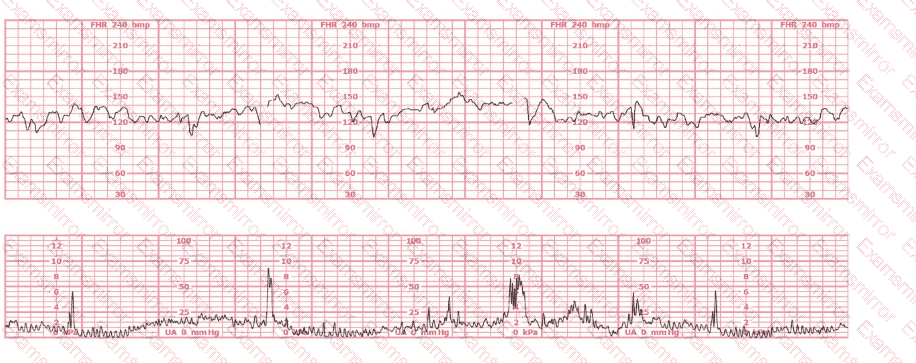
A woman (G1P0) arrives in triage with a pain score of 4/10 at 39-weeks gestation. The fetal heart rate tracing shown is obtained. The best intervention is to:
The success of interventions to treat fetal hypoxia first depends on:
A woman (G1, P0) at 41-weeks gestation presents to OB triage to rule out labor. Her cervical exam is 1 cm/50%/-2. Membranes are intact. She would like to go home if not in labor. Based on this tracing, which represents the last two hours, the best approach is:
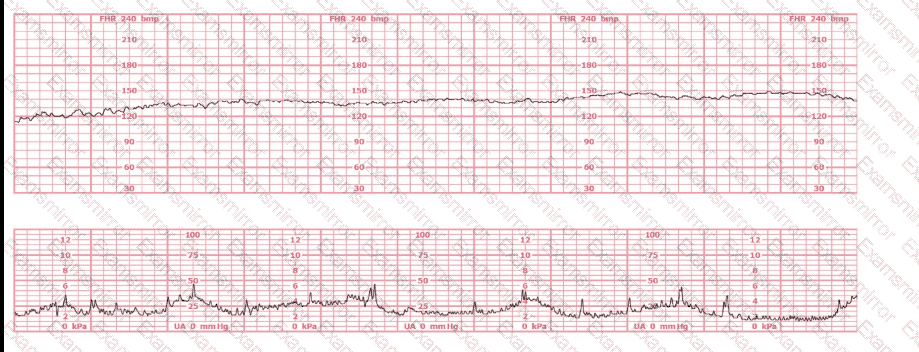
The baseline fetal heart rate in this tracing is:
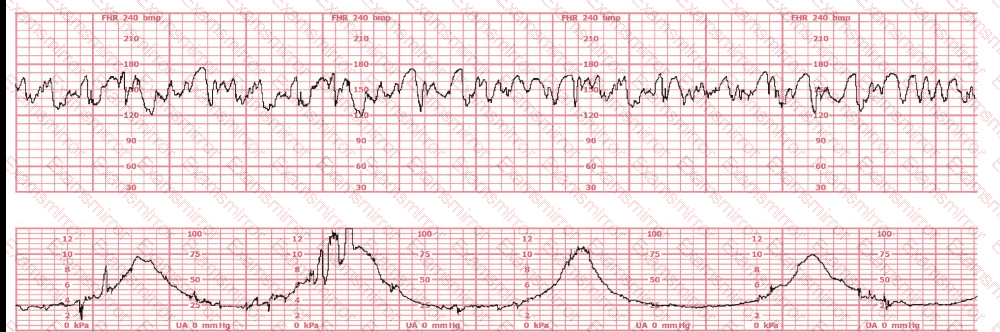
What is the appropriate interpretation of this tracing?
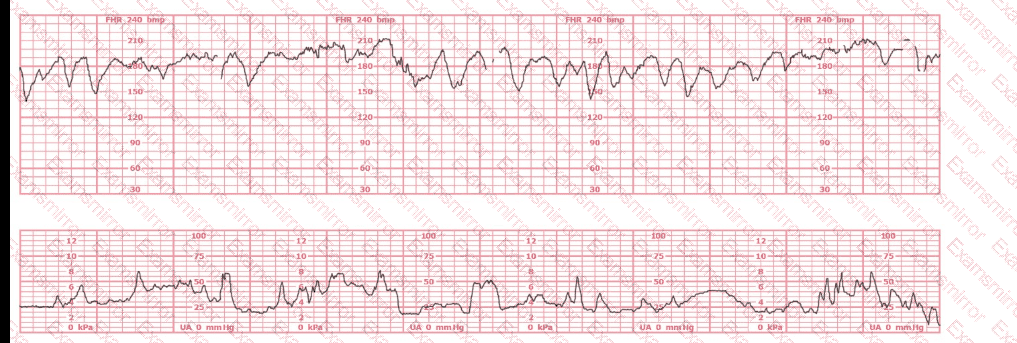
(Full question)
Spontaneous fetal heart rate accelerations indicate
This is a tracing of a multiparous woman in the second stage of labor. The vertex is at +3 station. This pattern has continued for the last 20 minutes. She has been pushing for 2½ hours, and oxytocin is infusing at 12 milliunits/minute. Management should include
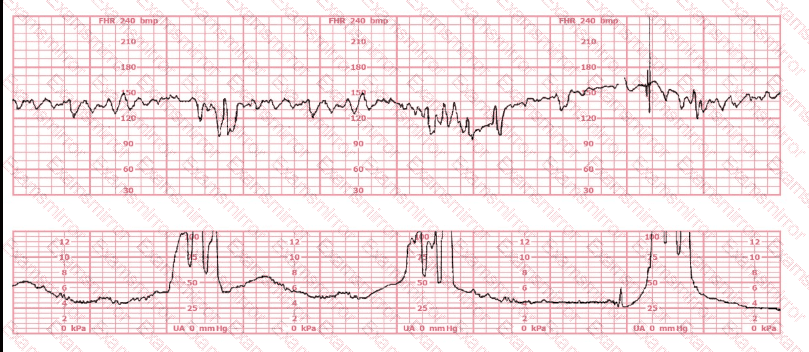
During the second stage of labor, a period of bradycardia develops. The fetal heart rate baseline variability is moderate. The most likely cause of this bradycardia is:
A 30-year-old woman (G2P0) is experiencing preterm labor at 26-weeks gestation. She is receiving magnesium sulfate for neuroprotection. Her external fetal monitoring tracing over the past 30 minutes is shown. The next step would be to:
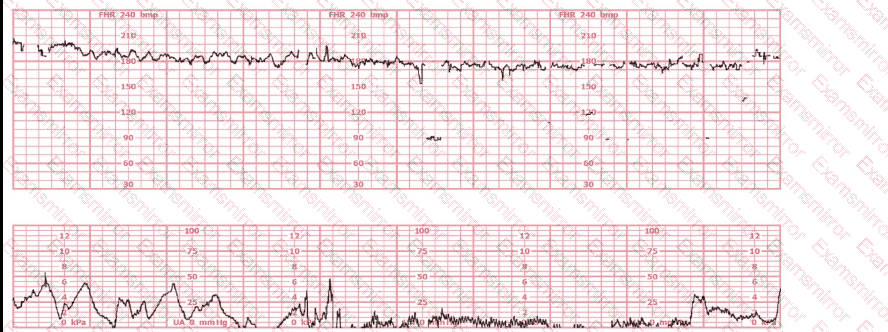
To differentiate a fetal dysrhythmia from artifact, it is important to recognize that artifact appears as deflections that are:

TOP CODES
Top selling exam codes in the certification world, popular, in demand and updated to help you pass on the first try.