
Pre-Winter Sale Limited Time 70% Discount Offer - Ends in 0d 00h 00m 00s - Coupon code = getmirror
Pass the Fortinet NSE 5 Network Security Analyst NSE5_FWB_AD-8.0 Questions and answers with ExamsMirror
Exam NSE5_FWB_AD-8.0 Premium Access
View all detail and faqs for the NSE5_FWB_AD-8.0 exam
0 Students Passed
0% Average Score
0% Same Questions
You are a FortiWeb administrator investigating an SQL injection attack on your company’s customer portal. The network firewall and intrusion prevention system (IPS) did not stop the attack.
You decide to deploy a web application firewall (WAF) to help prevent this type of attack.
Which two actions can you take to block application-layer threats? (Choose two.)
A large enterprise has an existing web infrastructure with complex routing rules and static IP address assignments. The network administrators cannot modify the current IP address scheme, but they need FortiWeb to inspect and block threats like SQL injection and cross-site scripting (XSS) without changing the client-server communication flow.
In this situation, which FortiWeb operation mode is the most suitable?
Refer to the exhibits.
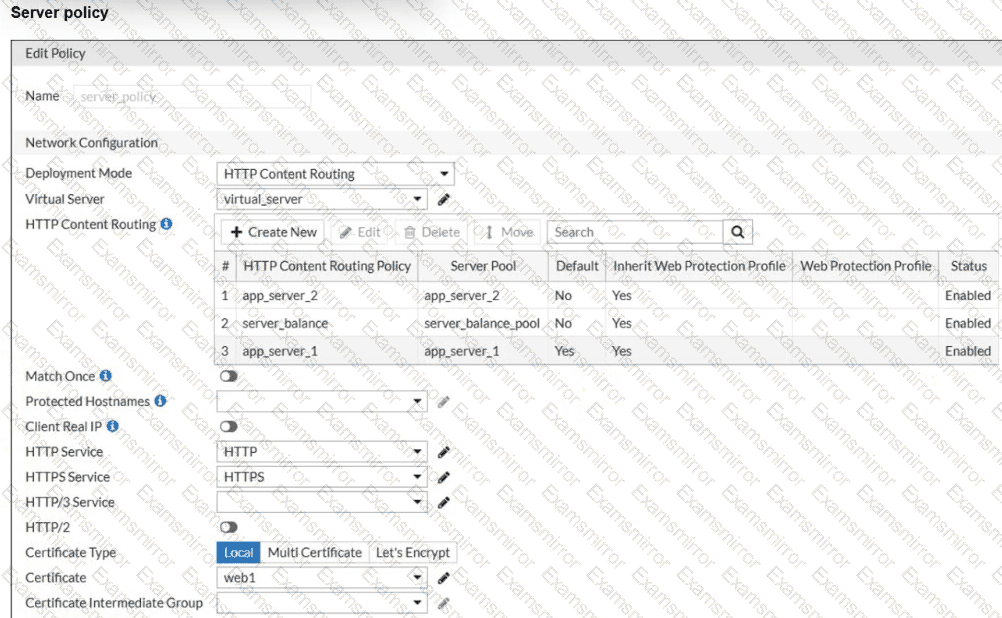
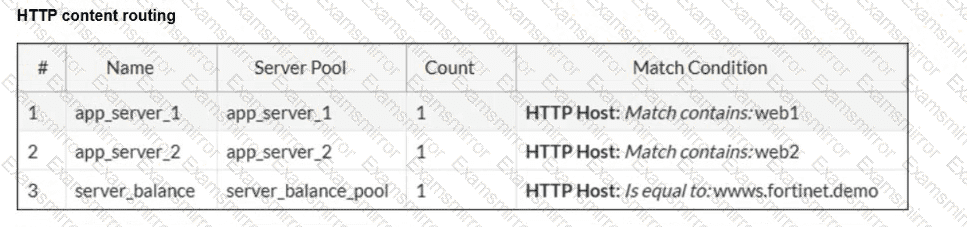
A new domain, https://finance.fortinet.demo, was added but not explicitly mapped. Users report the site loads correctly, but you’re unsure which back-end server is being used.
Why is this request succeeding despite no explicit routing rule for finance.fortinet.demo?
How should a FortiWeb administrator configure behavior-based bot detection to identify traffic from nonhuman users?
You have configured parameter validation, file security, and machine learning (ML) anomaly detection for a web form, but some server-side request forgery tests are still succeeding. You need to advise the team on what to prioritize next to improve SSRF protection without compromising other parts of the application.
Which recommendation would best strengthen FortiWeb’s ability to block remaining SSRF attempts?
Refer to the exhibit.
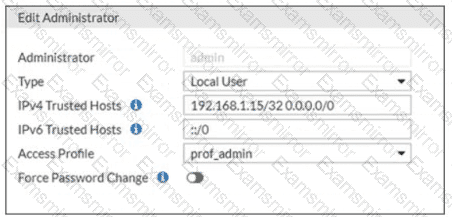
There is only one administrator account configured on FortiWeb and IPv6 is not configured on any interface.
Which action should an administrator take to restrict any brute force attacks that attempt to gain access to the FortiWeb management GUI?
While reviewing FortiWeb logs, you notice a suspicious login request that failed authentication. You suspect it may be part of an injection attack targeting the login form.
Which input pattern is an example of a typical SQL injection attempt that could bypass authentication checks?
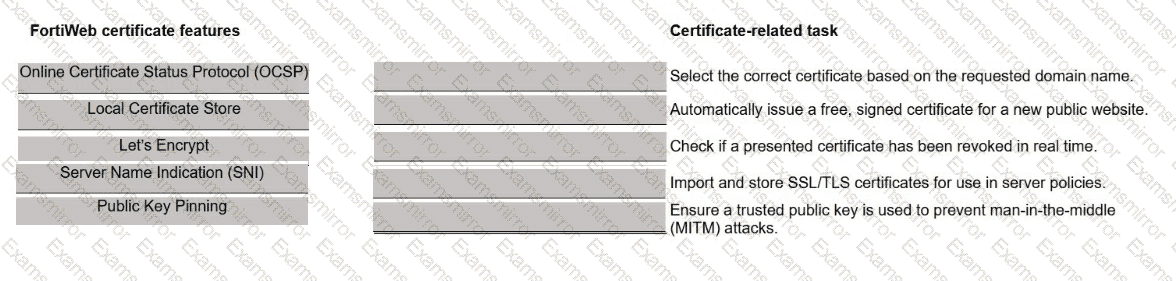
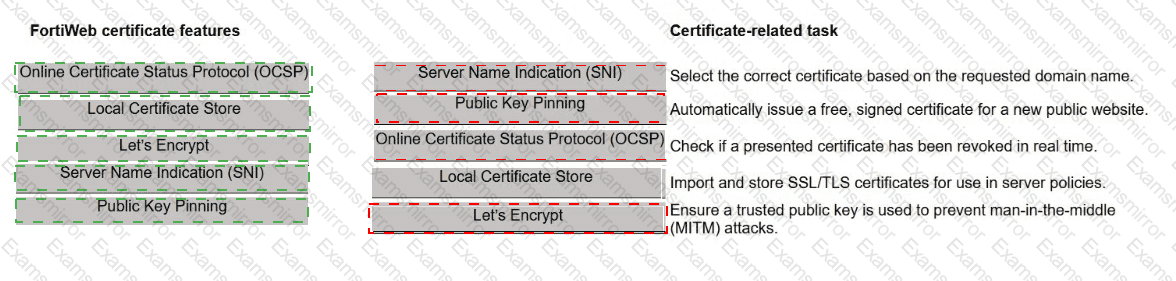
You are working on securing HTTPS communication across different services using FortiWeb. Your task is to configure and validate digital certificates for various traffic and communication needs.
Match each FortiWeb certificate feature to the certificate-related task that supports the feature.
You are reviewing a report from your FortiWeb logs and notice a JavaScript payload like < script > document.cookie < /script > is submitted through a product review form. The page doesn’t filter the script, and when users view the review, their session cookies are exposed.
Why is this attack dangerous?
A FortiWeb administrator sees the following request:
GET /api/v1/data HTTP/1.1
Host: example.com
Authorization: ApiKey abc123def456
The API key belongs to a user in group B who is authorized to access only /api/v1/reports.
What should the administrator do to prevent this unauthorized access?

TOP CODES
Top selling exam codes in the certification world, popular, in demand and updated to help you pass on the first try.