
Pre-Winter Sale Limited Time 70% Discount Offer - Ends in 0d 00h 00m 00s - Coupon code = getmirror
Pass the Autodesk Certified Professional BIM_MGT_101 Questions and answers with ExamsMirror
Exam BIM_MGT_101 Premium Access
View all detail and faqs for the BIM_MGT_101 exam
0 Students Passed
0% Average Score
0% Same Questions
A new project being set up requires consistency across all floor plans. However, because of variations in floor-to-floor heights, the project team needs a different View Range for each level.
What is the most efficient way to accommodate this?
A client’s project schedule requires a rigorous milestone/gateway review process, defined in the BIM Execution Plan. The design firm has its own internal checklist.
What should a BIM manager do to ensure the team is complying with the client’s requirements?
A team member accidentally unpinned and dragged a linked CAD file, and it is no longer aligned according to the Shared Coordinates.
How can the BIM manager realign the linked CAD file in the Revit model?
The BIM manager is working in an Architectural model that uses the phases Existing and New Construction . They have linked in a Structural model that uses only Phase 1 for existing and Phase 2 for new construction. After linking, they notice that demolition elements from the Structural model do not display correctly in the demolition views.
Which approach allows the BIM manager to display linked elements correctly based on this phase setup, without changing the phases in the linked model?
During a project onboarding meeting, the client provides their current BIM standards and templates to the BIM manager. The project will involve multiple consultants across different regions and is being delivered under a fast-track schedule with a high volume of design iterations. The client has also indicated that they plan to use a new collaboration platform not previously piloted on similar project types.
The BIM manager must evaluate whether the client’s materials are sufficient and aligned with digital-delivery expectations, collaboration goals, and coordination requirements.
Given these factors, which two of the client’s BIM resources must be prioritized for review to evaluate their ability to support digital delivery and coordination across regions, teams, and time constraints? (Select two.)
The BIM manager is coordinating a multi-building project in which each building must maintain a unique internal coordinate system but share a common origin point for site-wide references.
Which two actions are required to correctly manage the coordinate setup in this scenario? (Select two.)
The BIM manager oversees both design coordination and post-handover data requirements and is asked to ensure the digital deliverables align with the owner’s long-term asset-management system.
To minimize information gaps, inconsistencies in file formats, and unclear responsibilities throughout delivery, which tool should the BIM manager rely on to define who provides what information, when, and in what format, from design through facilities handover?
Note: In the context of this exam, the term Level of Development (LOD) is used interchangeably with level of information need.
Refer to the exhibits.
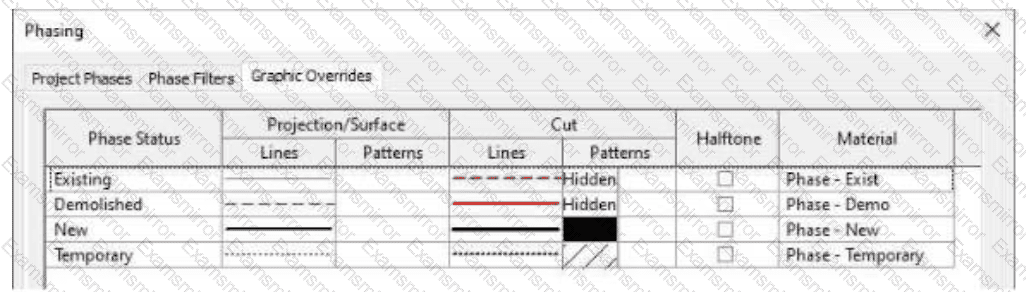
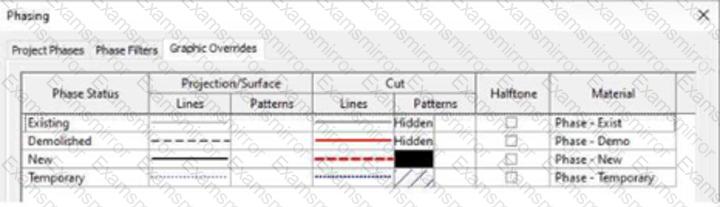
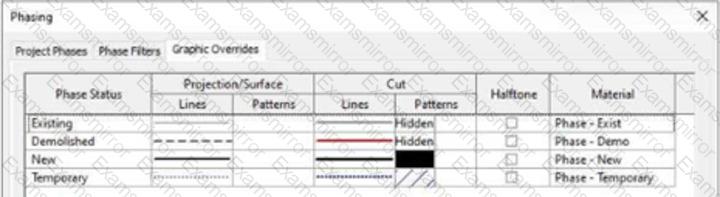
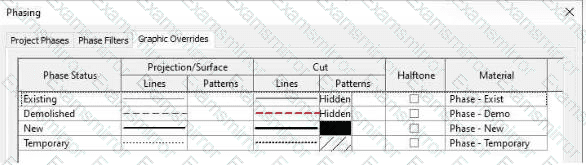
The firm’s technical group would like to show demolished elements as dashed red in all future projects. The BIM manager is updating the Revit template to meet this new standard.
Which Phase Graphic Override will accomplish this?




A government facility project requires unique data formatting and export requirements that comply with a global data-management initiative. A workflow utilizing a newly released add-on tool is developed to perform this task.
How should a BIM manager define training and ensure the appropriate staff receive it?
A BIM manager is preparing to onboard a group of subcontractors into Autodesk Forma for a large healthcare project. These subcontractors need access to a limited set of model files related only to interior partitions, but should not be able to view or modify structural, MEP, or scheduling content.
What two actions should the BIM manager take to manage data security in this scenario? (Select two.)

TOP CODES
Top selling exam codes in the certification world, popular, in demand and updated to help you pass on the first try.