
Black Friday Grand offer - Upto 75% off - Ends in 0d 00h 00m 00s - Coupon code = drift75
Pass the F5 LTM Specialist 301a Questions and answers with ExamsMirror
Exam 301a Premium Access
View all detail and faqs for the 301a exam
780 Students Passed
88% Average Score
94% Same Questions
A custom TCP application using a single server is being migrated to the LTM device. A server is being added to the pool. The application is known to violate the TCP protocol RFC. The application currently works without error from a user perspective.
Which virtual server type is appropriate in this situation?
Exhibit.

The three VLANS shown provide connectivity to backend servers. The backend servers are being moved to unmanaged switches and require separate interfaces.
How should the F5 device interfaces be configured?
An application is being load balanced through the LTM device using the configuration displayed below.
The network has been re-engineered to NAT all client connection. As a result, all client connections are hitting the same pool member.


Which changes should the LTM Specialist make in order to restore load balancing functionality wile maintaining session persistence?
An LI M device is experiencing a high volume of traffic. The virtual server is struggling under the load. The problem appears to be on the server side connections. The virtual server is accepting connections . The virtual server is accepting connections on https and is configured with an SSL profile and http pool.
What should be added to increase the performance of the device?
An LTM Specialist has the configuration shown:
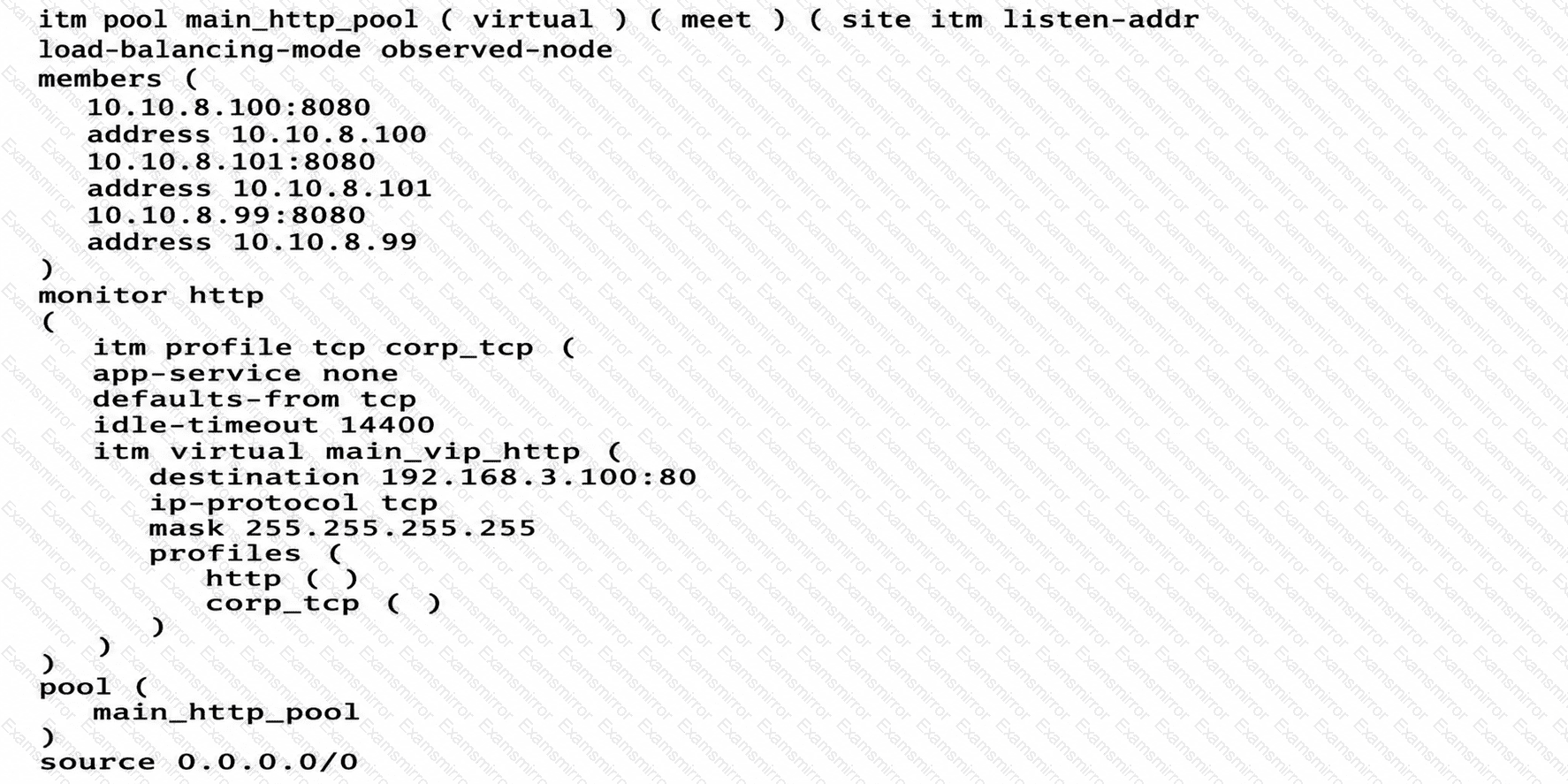
The LTM Specialist needs to create a new virtual server in part B.
Which virtual address(es) should be used for the new virtual server?
To improve application security, an LTM Specialist must configure a BIG application access. The BIG-IP system to authenticate the client certificate before permitting application access. The BIG-IP system must also support the ability to red to redirect users to a certificate enrolment system without generating a browser error.
Within the Client SSL profile, which value should the LTM Specialist select for the Client Certificate option?
HA group external trunk failure threshold
A design requires the LTM device to become HA Standby when one of the two physical interfaces on the External trunk is down. The External trunk is an interface on the External VLAN. Which TMOS command enables this behaviour? (Choose one answer.)
External monitor Manual Resume
An LTM Specialist uses an external monitor to evaluate the hard drive usage of a node. The monitor marks the node down because it exceeds the specified threshold. Disk usage is corrected to below the threshold; however, the node remains offline. Which feature causes this behaviour? (Choose one answer.)
An LTM Specialist needs to create two virtual servers.
The application has links for both HTTP and HTTPS version of application. The client must be persistence to a pool member, no matter which virtual server is accessed.
What must be selected in the Source Address Affinity persistence profile?
A Client makes the request displayed below to the application server.
Which virtual server type should an LTM Specialist use to load balance based on the URI?

TOP CODES
Top selling exam codes in the certification world, popular, in demand and updated to help you pass on the first try.