
Halloween Sale Special Limited Time 75% Discount Offer - Ends in 0d 00h 00m 00s - Coupon code = drift75
Pass the Microsoft Certified: Azure Databricks Data Engineer DP-750 Questions and answers with ExamsMirror
Exam DP-750 Premium Access
View all detail and faqs for the DP-750 exam
0 Students Passed
0% Average Score
0% Same Questions
You need to curate Unity Catalog objects that reference the ERP data. The solution must meet the governance requirements.
What should you do?
You have an Azure Databricks workspace.
Users report that a Databricks notebook that runs each day takes longer than expected to run.
When reading the Directed Acyclic Graph (DAG), you discover the following issues concerning the Apache Spark stage:
• Most tasks in the stage finish quickly.
• A few tasks in the stage run more slowly.
• The CPU is underutilized at the end of the stage.
• The slow tasks process many more input records.
• The stage is blocked while it waits for the few slow tasks.
What is the root cause of the issues?
You have an Azure Databricks workspace that is enabled for Unity Catalog and contains:
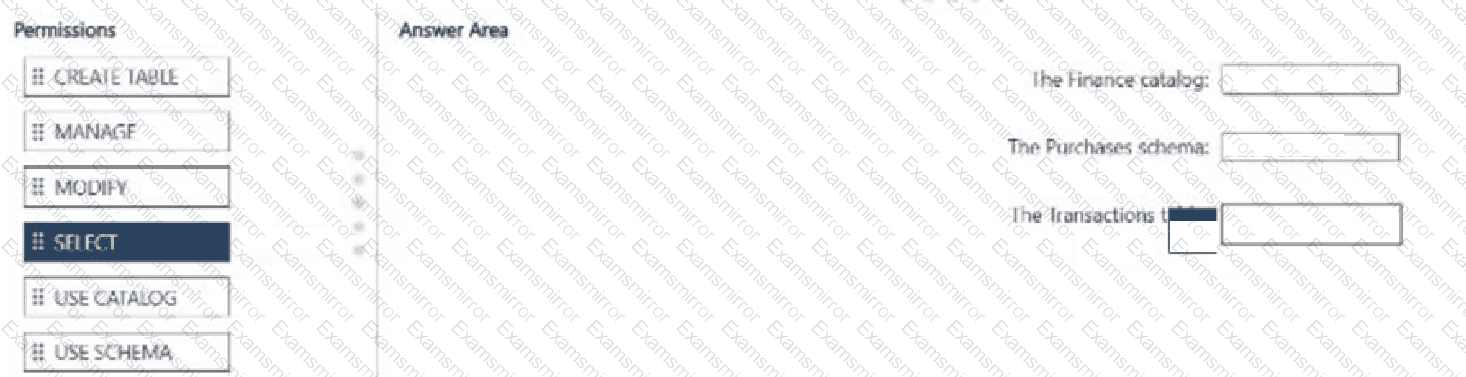
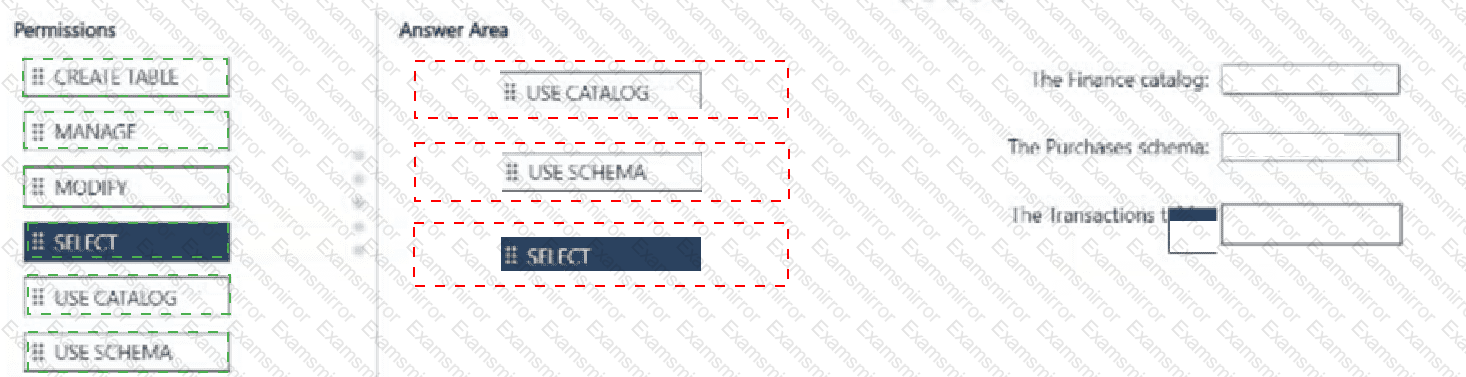
A catalog named Finance
A schema named Purchases in the Finance catalog
A table named Transactions in the Purchases schema
You need to ensure that a user named finance_user can query the Transactions table. The solution must follow the principle of least privilege.
Which permission should you grant to finance_user for each object? To answer, drag the appropriate permissions to the correct objects. Each permission may be used once, more than once, or not at all. You may need to drag the split bar between panes or scroll to view content.
NOTE: Each correct selection is worth one point.
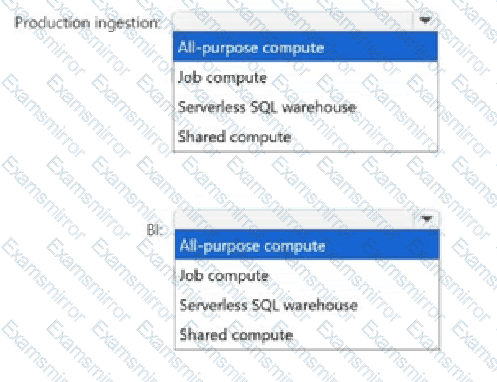
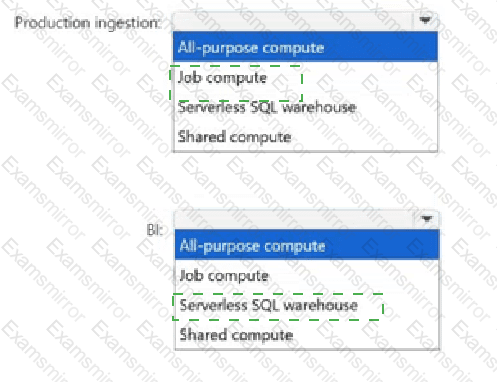
You need to recommend a compute type for the production ingestion workloads and BI workloads. The solution must meet the environment and compute requirements.
What should you recommend for each type of workload? To answer, select the appropriate options in the answer area.
NOTE: Each correct selection is worth one point.
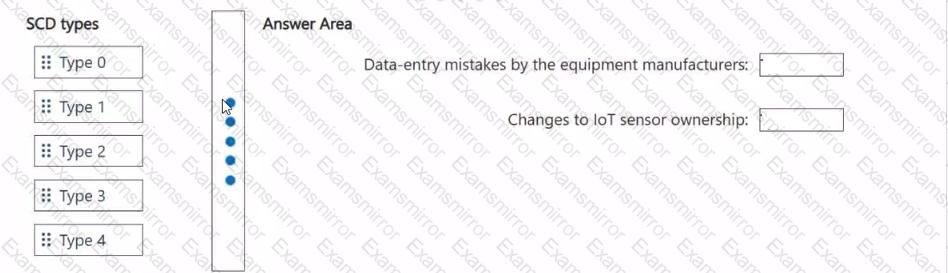
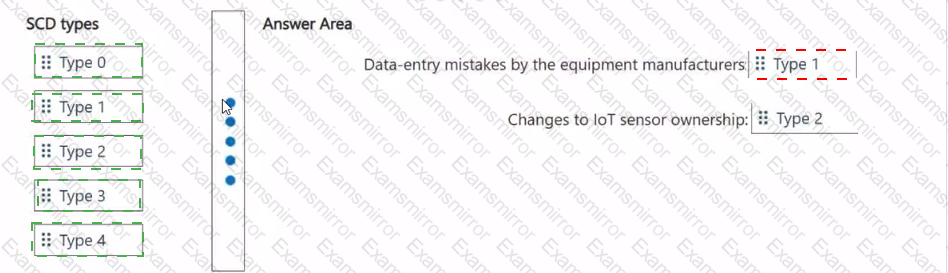
Which SCD type should you use to support the planned data modeling changes? To answer, drag the appropriate types to the correct issues. Each type may be used once, more than once, or not at all. You may need to drag the split bar between panes or scroll to view content.
NOTE: Each correct selection is worth one point.
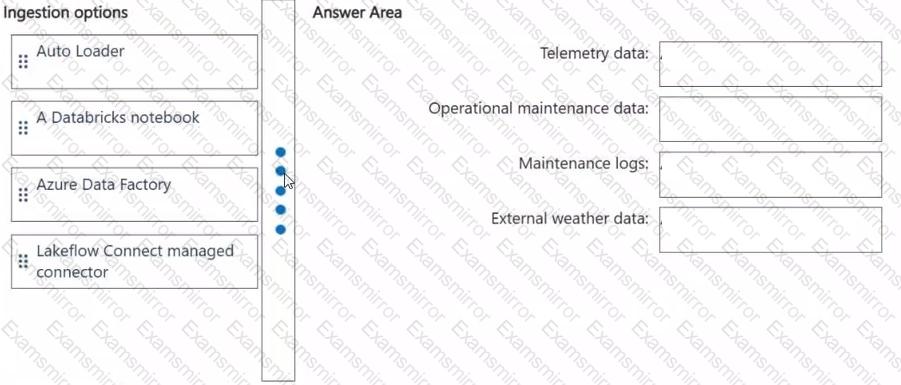
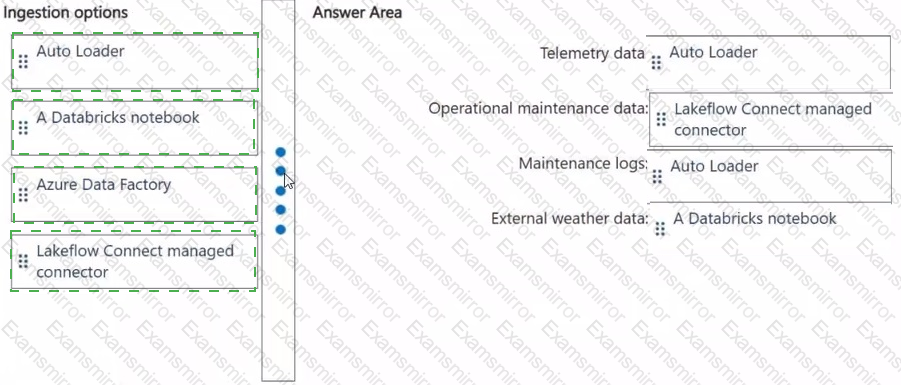
Which ingestion option should you recommend for each data source? To answer, drag the appropriate options to the correct data sources. Each option may be used once, more than once, or not at all. You may need to drag the split bar between panes or scroll to view content.
NOTE: Each correct selection is worth one point.
You need to develop the task logic for a new job in Lakeflow Jobs that processes telemetry data.
Each task must contain only the appropriate logic for its step in the pipeline. The solution must support the planned changes and meet the data ingestion and processing requirements.
What should you do?
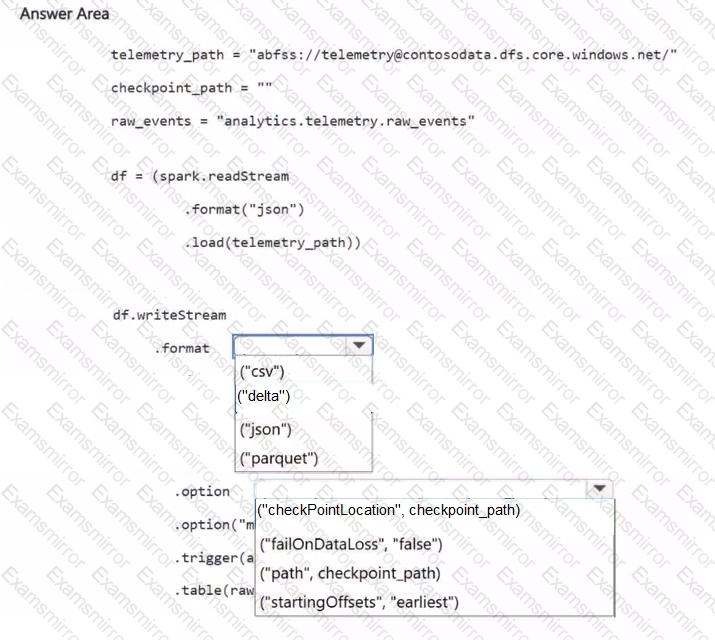
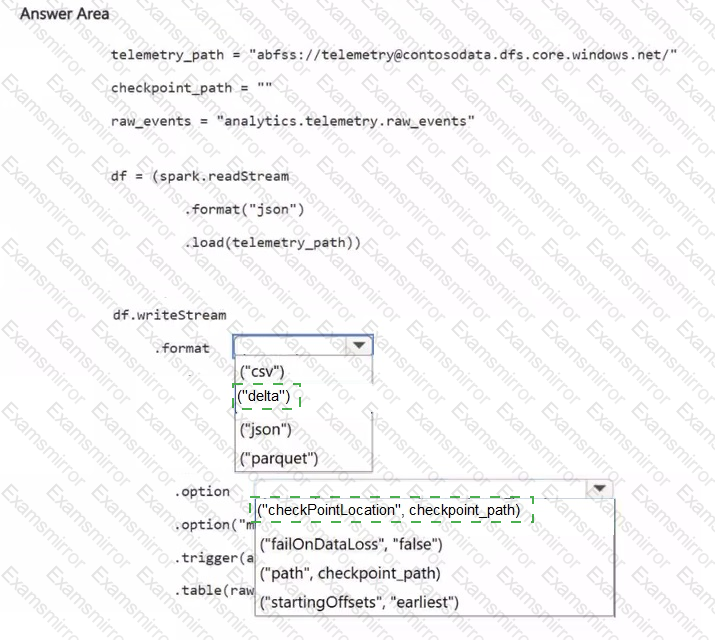
You need to complete the PySpark code for the Spark Structured Streaming pipelines. The solution must meet the data ingestion and processing requirements.
How should you complete the code segment? To answer, select the appropriate options in the answer area.
NOTE: Each correct selection is worth one point.
You need to configure compute for the ingestion of telemetry data. The solution must meet the data ingestion and processing requirements.
What should you do?

TOP CODES
Top selling exam codes in the certification world, popular, in demand and updated to help you pass on the first try.