
Pre-Winter Sale Limited Time 70% Discount Offer - Ends in 0d 00h 00m 00s - Coupon code = getmirror
Pass the PECB ISO 9001 ISO-9001-Lead-Auditor Questions and answers with ExamsMirror
Exam ISO-9001-Lead-Auditor Premium Access
View all detail and faqs for the ISO-9001-Lead-Auditor exam
735 Students Passed
91% Average Score
96% Same Questions
What must the auditor consider in order to mitigate audit risks and obtain reasonable assurance?
(Select the six statements that are required as part of a second-party audit to ISO 9001 carried out by an organisation to a key supplier (ABC), taking into account recommendations from ISO 19011.)
Scenario 1: AL-TAX is a company located in California which provides financial and accounting services. The company manages the finances of 17 companies and now is seeking to expand their business even more The CEO of AL-TAX, Liam Durham, claims that the company seeks to provide top-notch services to their clients Recently, there were a number of new companies interested in the services provided by AL-TAX.
In order to fulfill the requirements of new clients and further improve quality, Liam discussed with other top management members the idea of implementing a quality management system (QMS) based on ISO 9001. During the discussion, one of the members of the top management claimed that the size of the company was not large enough to implement a QMS. In addition, another member claimed that a QMS is not applicable for the industry in which AL TAX operates. However, as the majority of the members voted for implementing the QMS. Liam initiated the project.
Initially, Liam hired an experienced consultant to help AL-TAX with the implementation of the QMS. They started by planning and developing processes and methods for the establishment of a QMS based on ISO 9001. Furthermore, they ensured that the quality policy is appropriate to the purpose and context of AL TAX and communicated to all employees. In addition, they also tried to follow a process that enables the company to ensure that its processes are adequately resourced and managed, and that improvement opportunities are determined.
During the implementation process, Liam and the consultant focused on determining the factors that could hinder their processes from achieving the planned results and implemented some preventive actions in order to avoid potential nonconformities Six months after the implementation of the QMS. AL-TAX conducted an internal audit. The results of the internal audit revealed that the QMS was not fulfilling all requirements of ISO 9001. A serious issue was that the QMS was not fulfilling the requirements of clause 5.1.2 Customer focus and had also not ensured clear and open communication channels with suppliers.
Throughout the next three years, the company worked on improving its QMS through the PDCA cycle in the respective areas. To assess the effectiveness of the intended actions while causing minimal disruptions, they tested changes that need to be made on a smaller scale. After taking necessary actions, AL-TAX decided to apply for certification against ISO 9001.
Based on the scenario above, answer the following question:
According to scenario 1, AL-TAX determined the factors that could hinder their processes from achieving the planned results and implemented preventive actions. This means they employed:
Who maintains ownership of the audit report?
You are carrying out an audit at an organisation seeking certification to ISO 9001 for the first time. The organisation offers health and safety training to
customers.
You are interviewing the Quality Systems Manager (QSM).
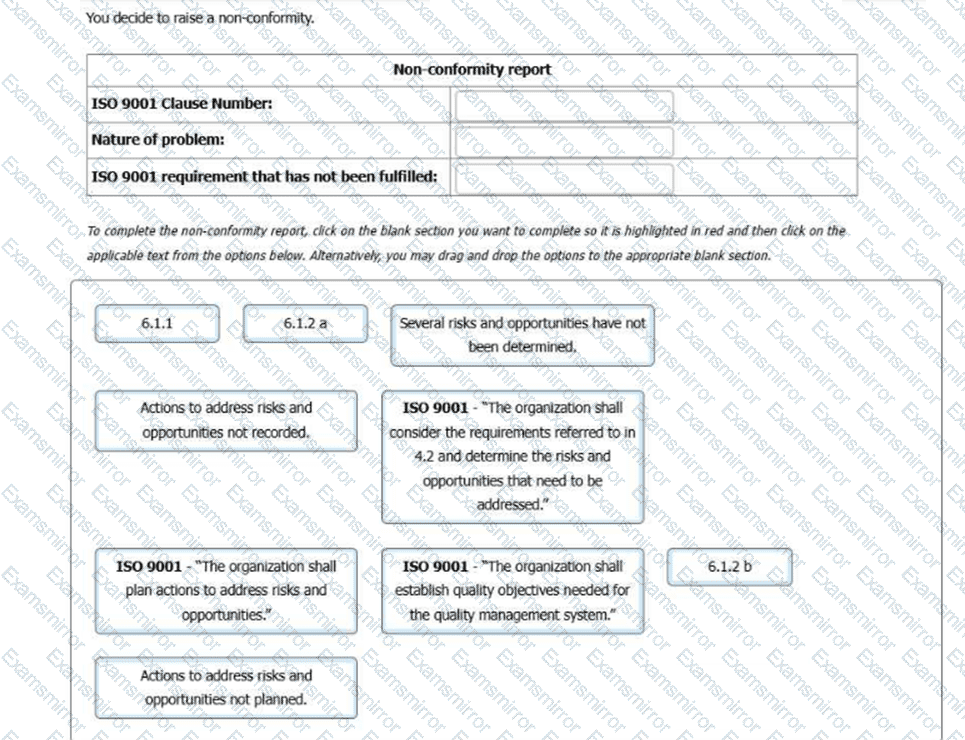
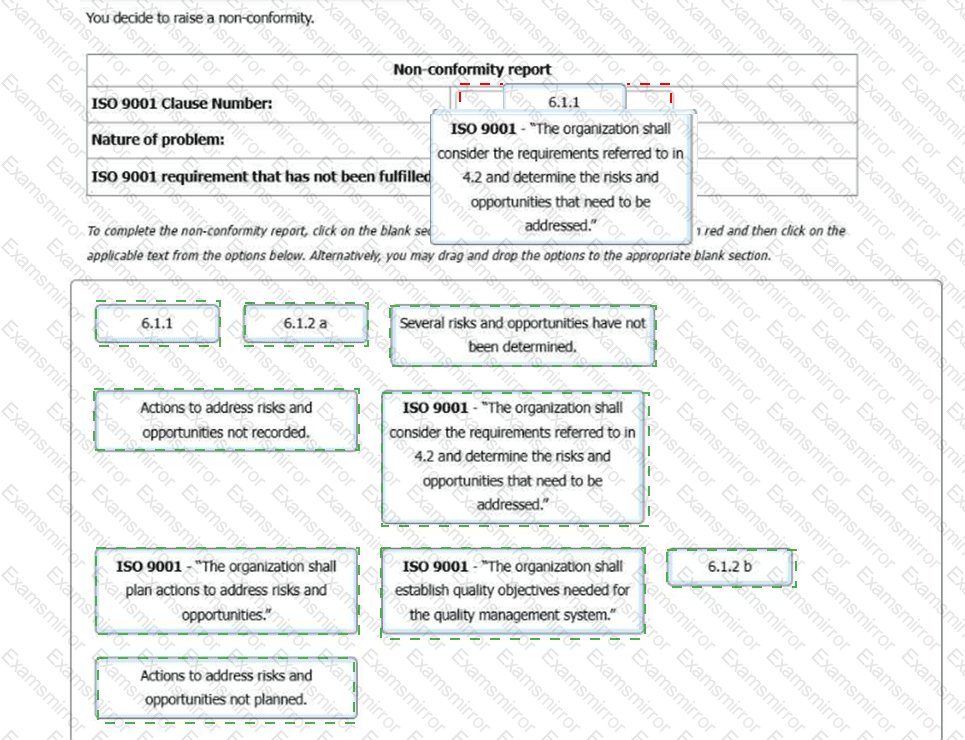
You: " What risks and opportunities have the business identified? "
QSM: " I ' 1l show you. This was discussed with the Managing Director at the latest management review. "
Narrative: The QSM shows you the latest management review record and points to the following table:

You: " How is the business planning to address these risks and opportunities? "
QSM: " The MD said that they already knew about them so it was not necessary. "
Which two of the following are included in the objectives of the ' Stage 1 initial certification audit ' ?
You are carrying out an audit at an organisation seeking certification to ISO 9001 for the first time. The organisation offers regulatory consultancy services to manufacturers of cosmetics. The business operates from ten regional offices.
You are nearing the end of the audit and need to decide if sufficient evidence of top management leadership and commitment with respect to the quality management system has been gathered.
Which four of the following would demonstrate top management leadership and commitment with respect to the quality management system?
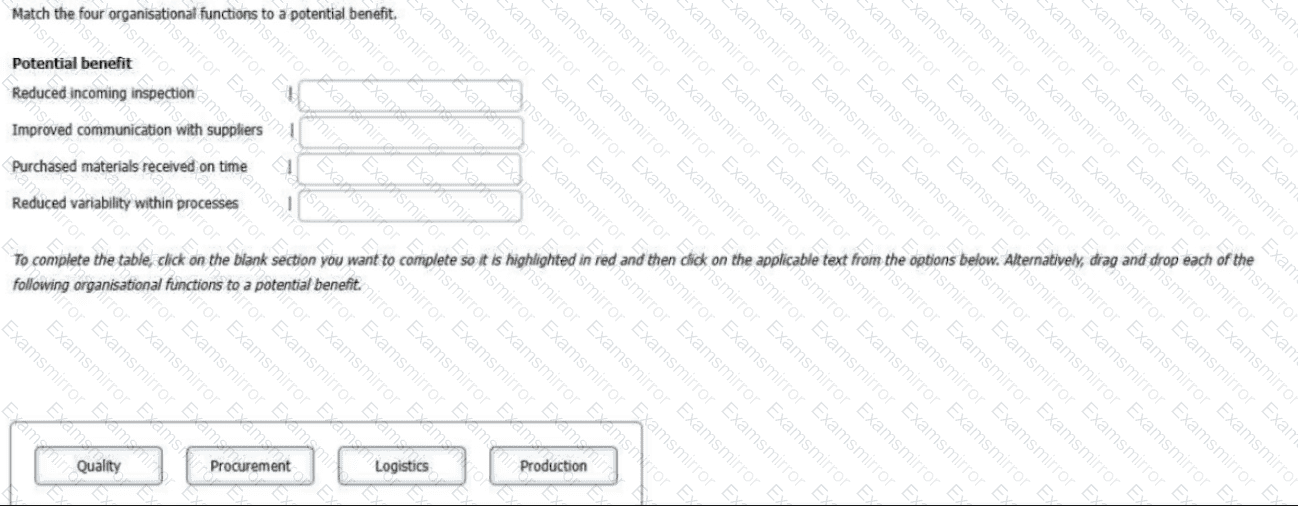
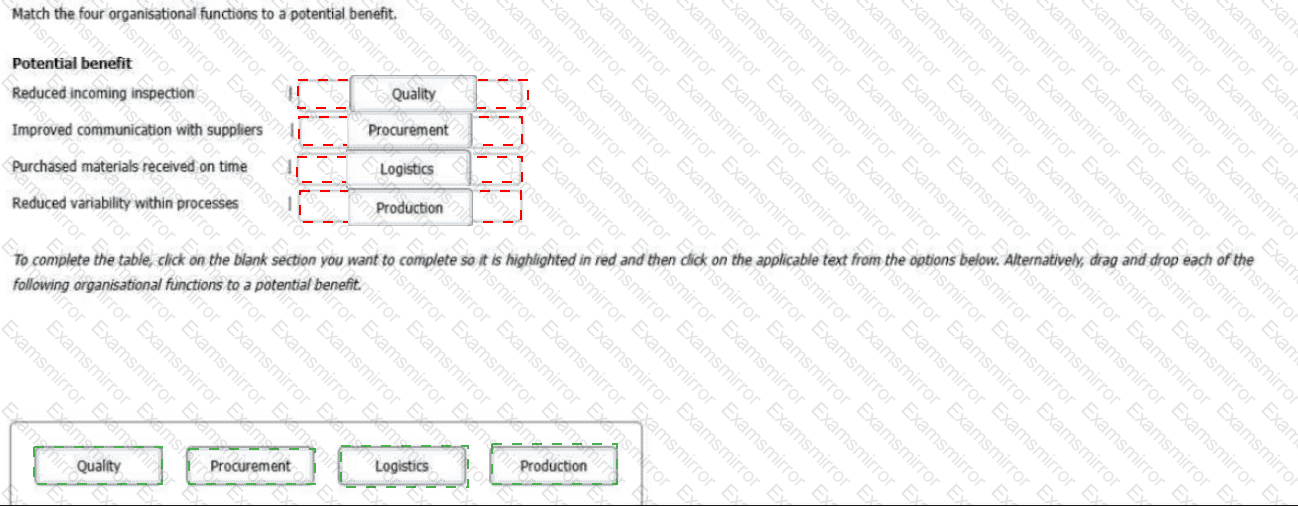
An organisation decides to purchase products and services only from ISO 9001 certified suppliers.
Match the four organisational functions to a potential benefit.
(In the context of a second-party quality management system audit , select the two correct statements from the following:)
Select the two activities which pertain to Third-Party Audit.

TOP CODES
Top selling exam codes in the certification world, popular, in demand and updated to help you pass on the first try.